Why there is no single price
Two rooms of the same size can cost very different amounts to paint, because the work depends on what is on the walls today. A clean, sound wall with a similar color needs little more than two coats. A wall with holes, stains, heavy texture or a dark color needs repair, primer and extra coats. Prices you see online are averages across very different jobs, which is why they rarely match your own.
The more useful question is what the job really involves. Once a painter has walked the space and named the prep, the products and the coats, any company can price the same scope, and you can see where the money goes.
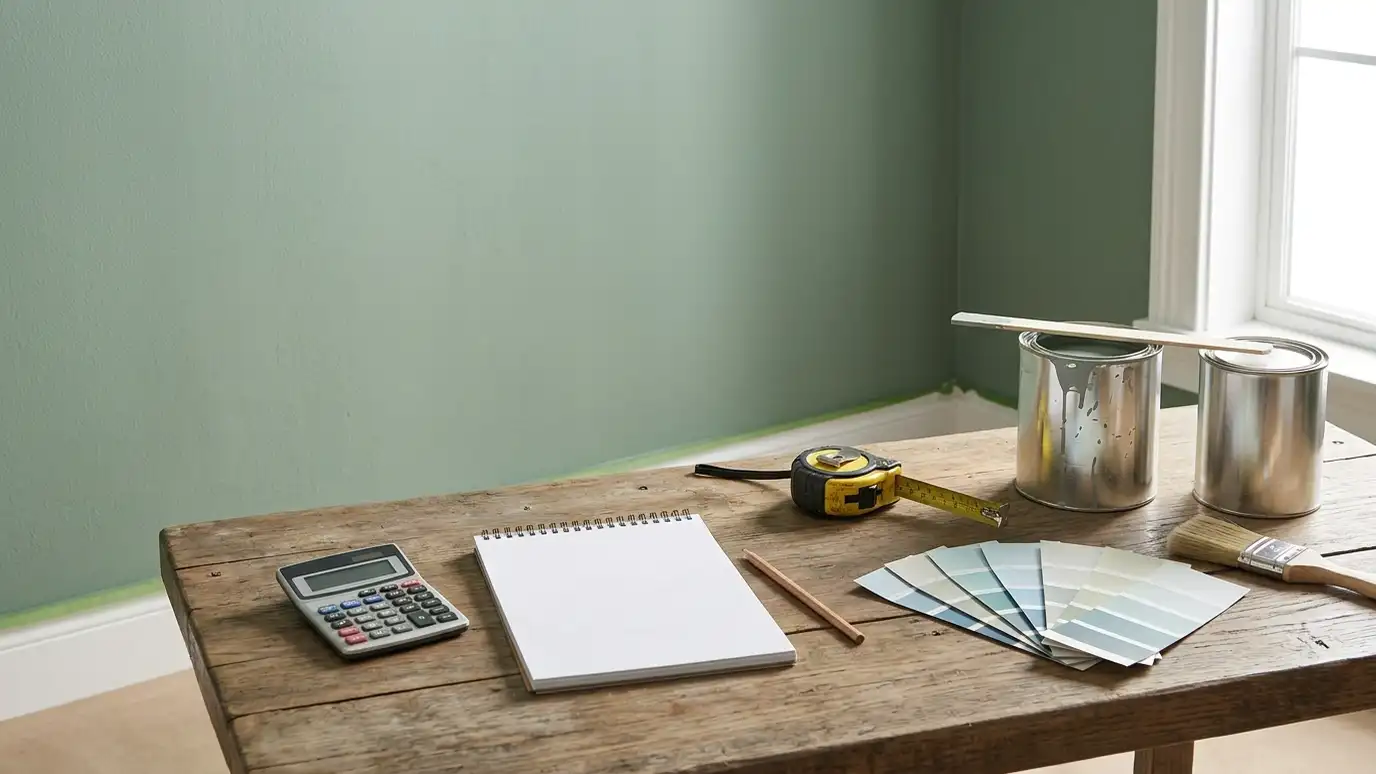
Before anyone gives you a number, note the rooms, the ceiling height, the current condition, the colors you want and any repairs you already know about. Those details let a painter give you a more accurate range.
It helps to write down the rooms, ceiling heights, current colors and any repairs you already know about before you call anyone. That short list lets a company give you a more useful range and shows you which companies ask good questions.
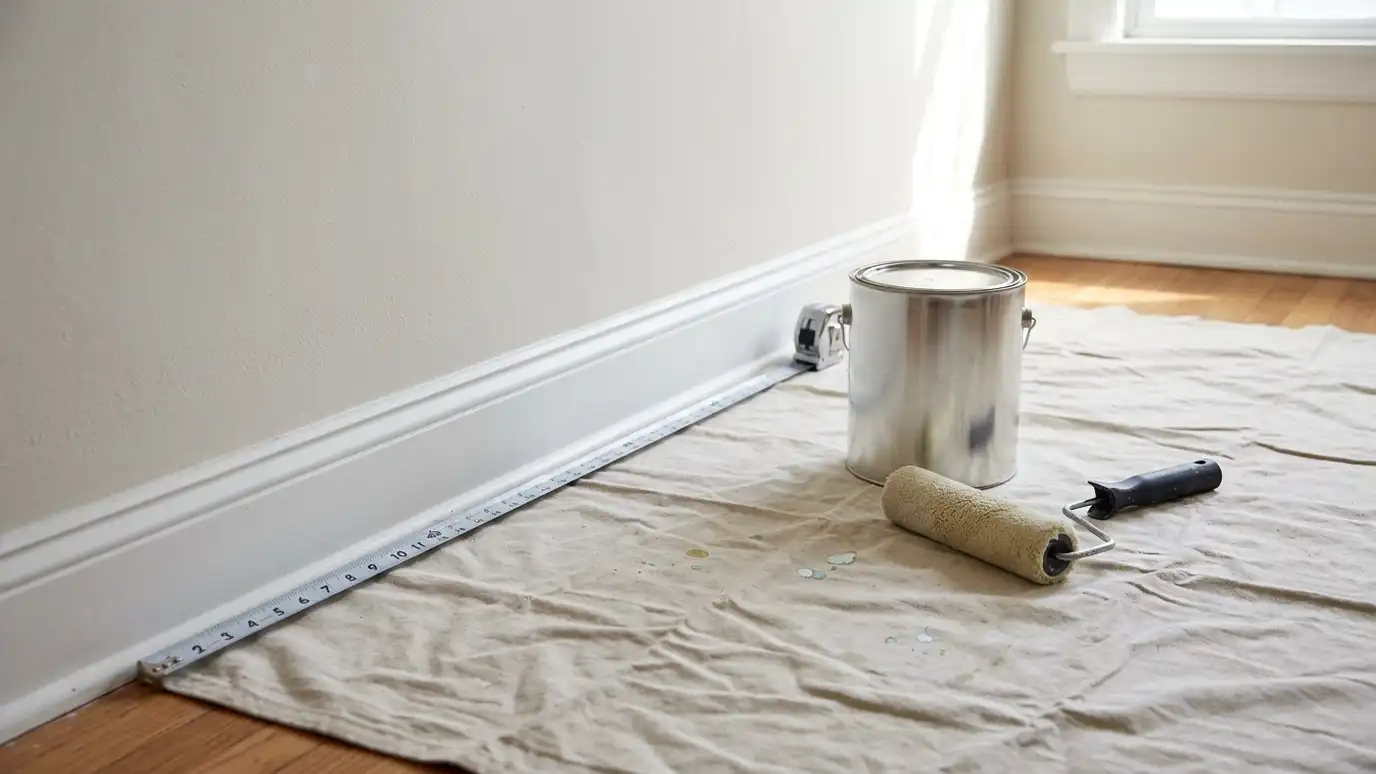
Surface area and height
The size of the walls, ceilings and trim is the starting point. Tall ceilings, stairwells and large exteriors take more time, scaffolding or lifts, and extra care.
Trim, doors, windows and cabinets add detail work that takes longer per square foot than open walls. A room with lots of trim takes more time than a plain box of the same size.
Exteriors depend on the number of stories, the siding type and how much can be reached from the ground.
Large rooms with lots of windows, built-ins or crown molding take more hand work than a plain box of the same size. Ask whether trim, doors and closets are included in a room price so you compare the same scope.
Preparation and repairs
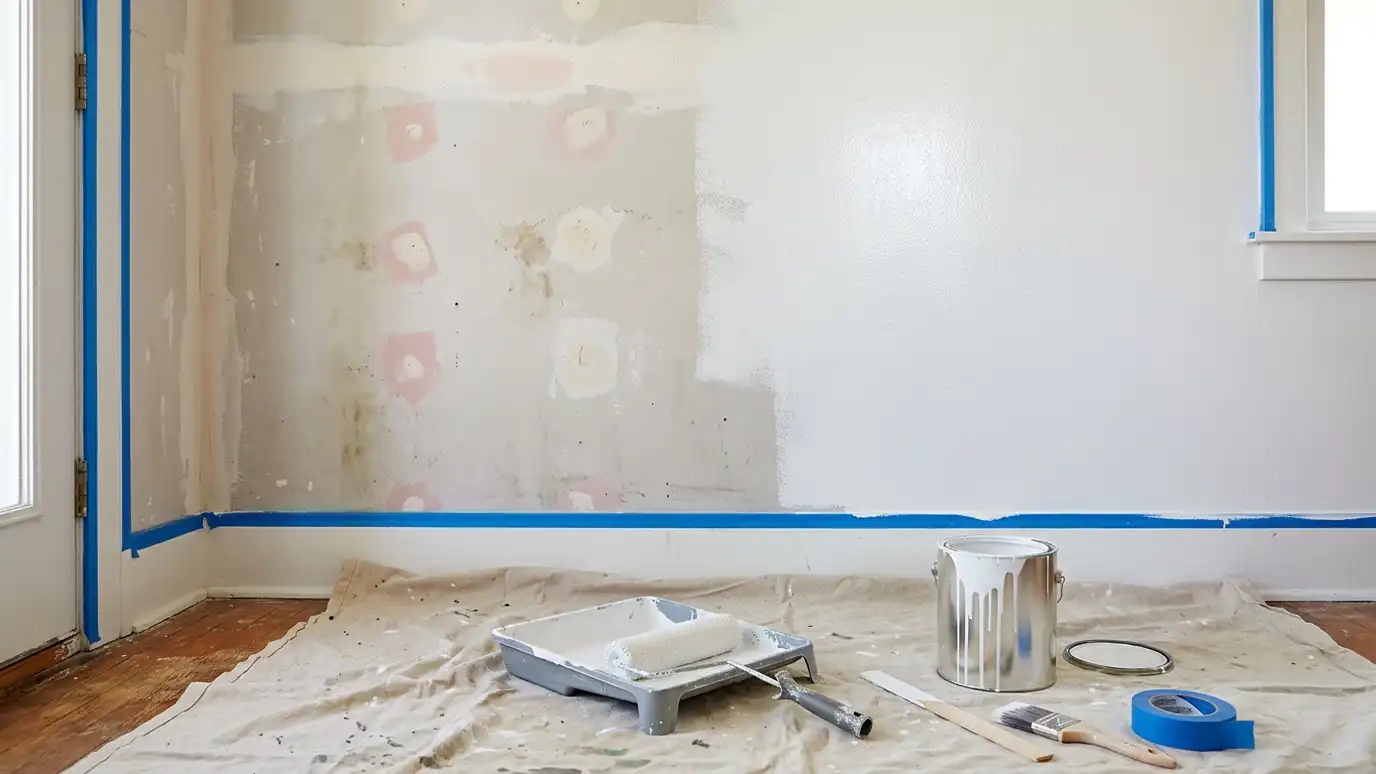
Preparation is where much of the time goes: washing, scraping, sanding, filling holes, caulking gaps and priming. It is also the part that decides how long the paint lasts.
Drywall repairs, texture matching and stain blocking add steps. A quote that skips them may save money now and cost more when the paint fails.
Ask each company what prep is included, how repairs are handled and whether primer is part of the scope.
Repairs are the most common surprise. Hairline cracks and nail holes are quick, while patched textures, stains and old wallpaper residue take time. A visit lets a painter see them before pricing the job.
Products and coats
Paint quality, sheen and the number of coats all affect the result. A dramatic color change, such as covering dark red with white, usually needs primer and extra coats.
Cabinets, trim and doors use harder enamels that cost more and take more time to apply well.
Ask which products are being used, how many coats are planned and whether the color will need a tinted primer.
Primer is not an optional extra on new drywall, bare wood, stains or big color changes. Ask whether it is included, and whether the quote assumes one coat or two of finish paint.
Access, schedule and occupancy
Furniture, clutter, pets, tight spaces and occupied homes slow work down. Commercial work that must happen at night or on weekends is planned differently from a vacant house.
Weather matters on exteriors. A schedule built around dry days and mild temperatures protects the finish and avoids rework.
A clear schedule at the estimate helps you plan and avoid surprises.
If you can be flexible about start dates or let painters work in empty rooms, the project may run faster and smoother. Tell the estimator about your schedule and constraints early.
How to compare quotes fairly
Ask every company for the same details: the rooms or areas, the prep, the products, the number of coats, the schedule and what is not included. A very low quote may leave out repairs, primer or a second coat.
Compare the whole plan, not just the number. A clear written scope, tidy habits and good communication are worth something.
Clear answers during the estimate are a good sign of how the project will go.
Keep your estimates, the colors you chose and the products used in one folder. When you need touch-ups or plan your next project, that record saves time and avoids guessing.
Get the scope written down, price the same work with every company and weigh it against how long you want the finish to last.