Weather and timing
Exterior paint needs dry surfaces, mild temperatures and several dry hours after application. Spring and fall are popular for good conditions, though many days in summer and winter work too.
Humidity, dew and sudden rain can ruin a fresh coat, so schedules include weather days.
Plan around the forecast and give painters flexibility.
Check the forecast for several days, not just the painting day. Paint needs time to dry and cure, and surprise showers can wash off or streak a fresh coat.
Preparation
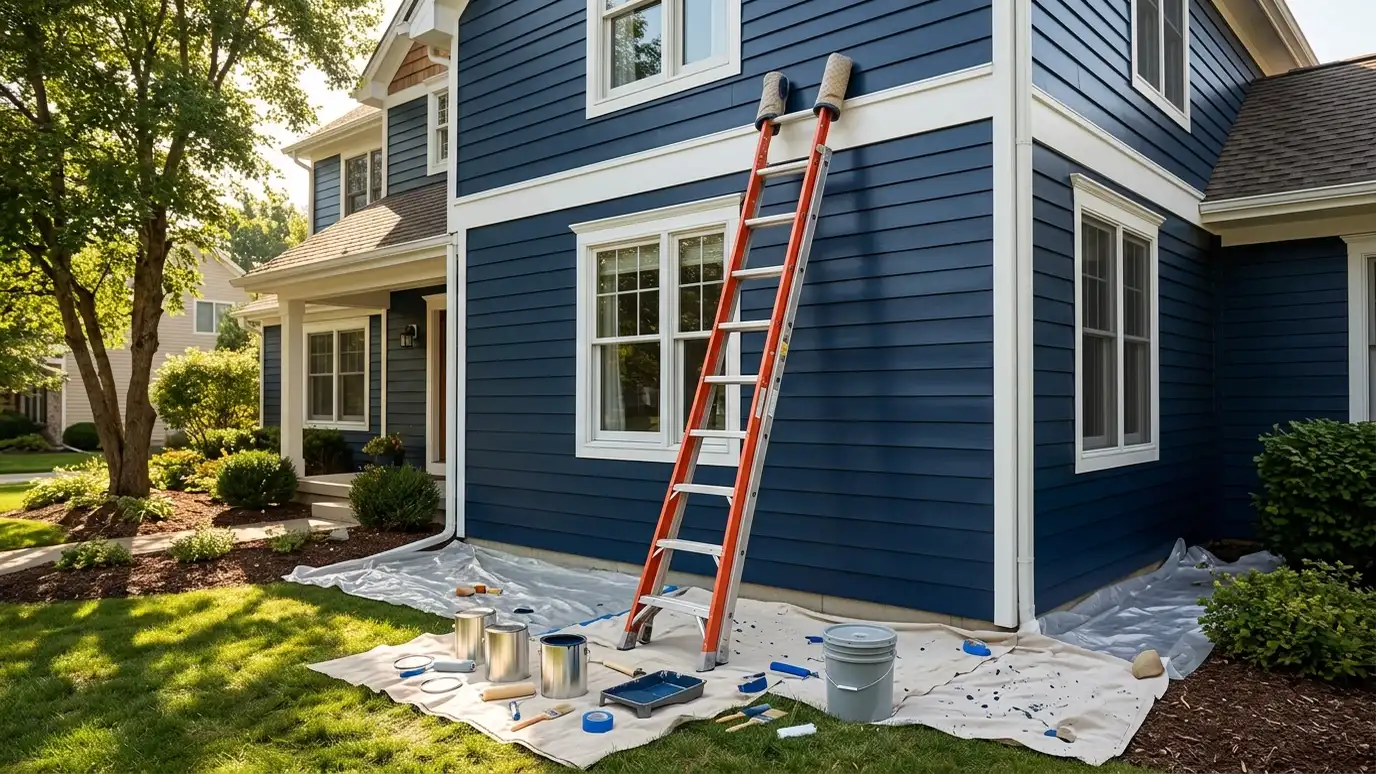
Preparation is the most important step. We wash off dirt and mildew, scrape loose paint, sand rough areas, repair rotted wood, caulk gaps and prime bare spots.
Skipped prep is the main reason exterior paint peels early. A clean, sound surface helps the paint grip.
Allow time for surfaces to dry after washing.
Wash with care. Strong pressure can drive water behind siding and damage wood, so gentle washing with the right cleaner is often better than blasting.
Siding types
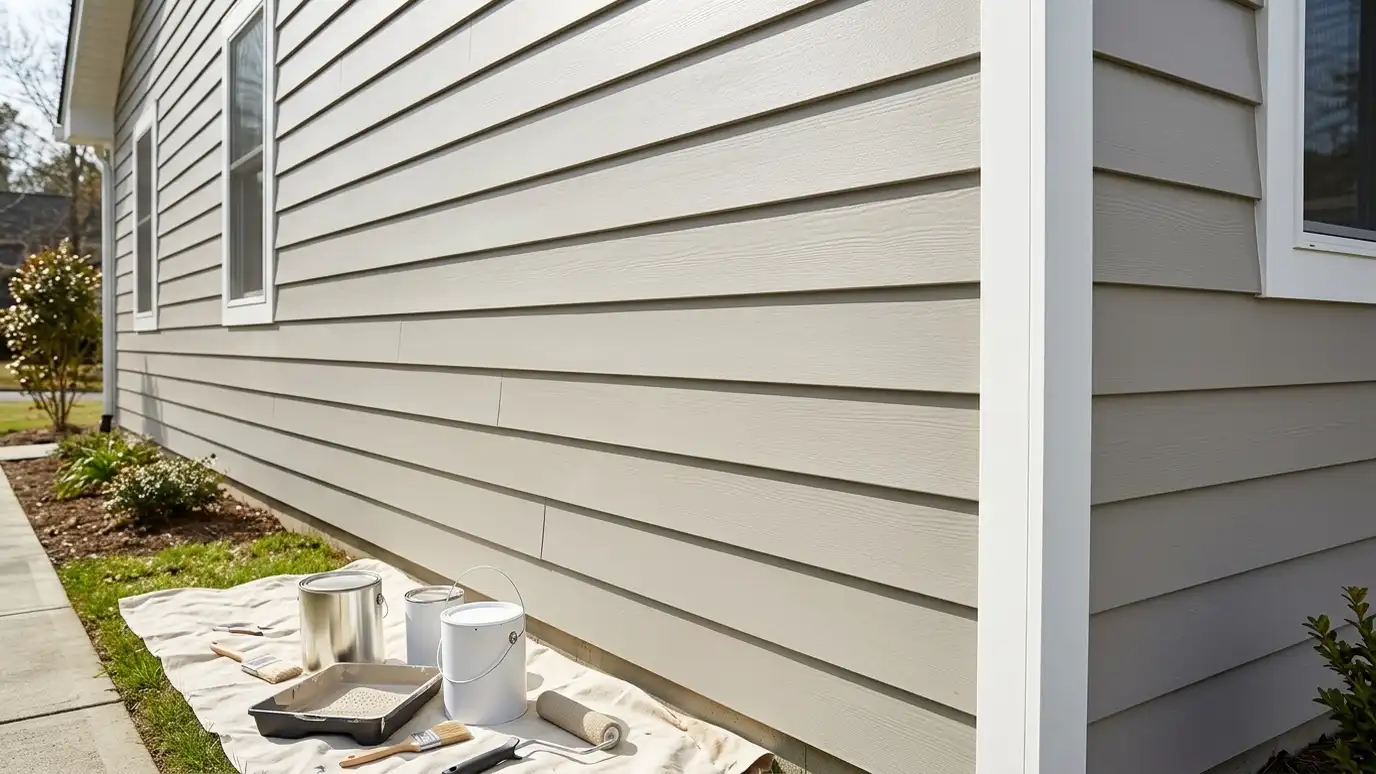
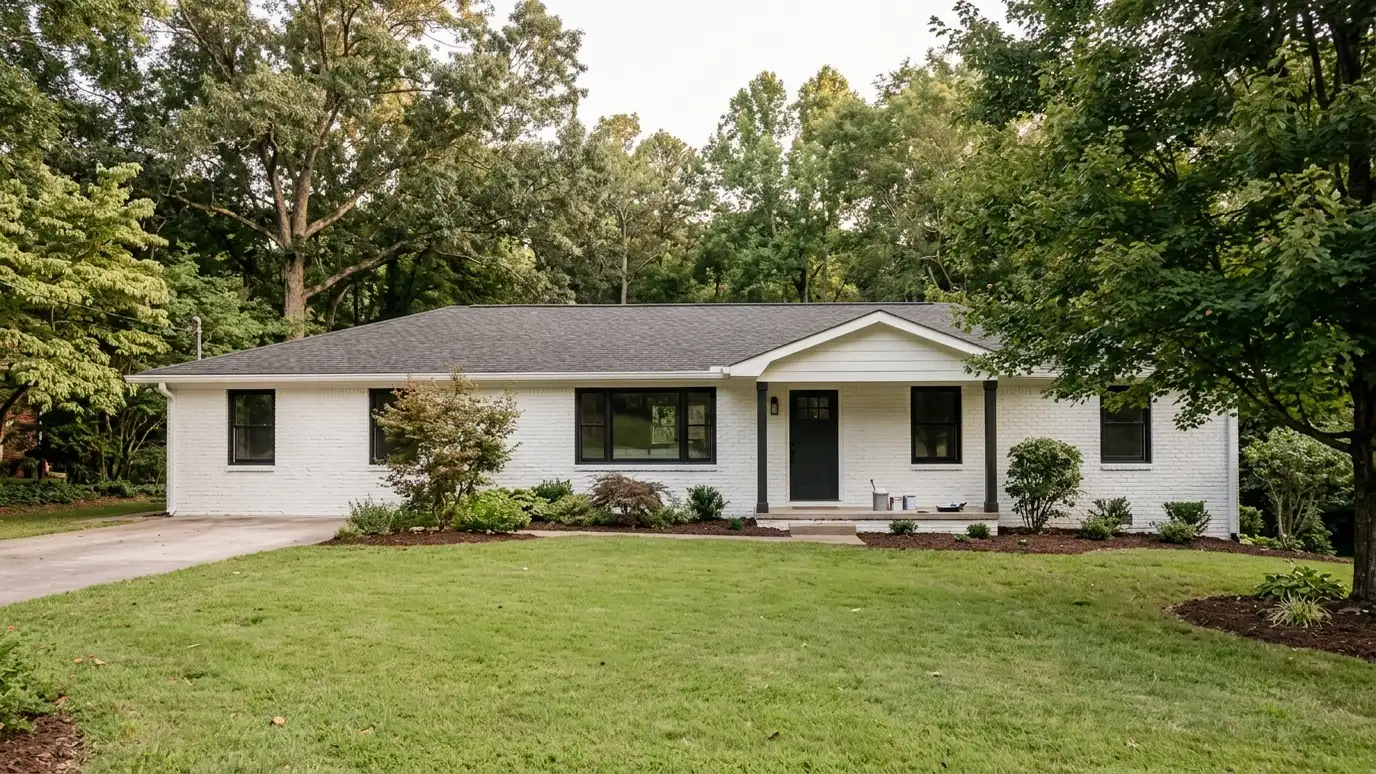
Wood, fiber cement, brick, stucco and vinyl all take paint differently. Wood needs primer and attention to rot. Brick needs breathable masonry paint. Vinyl needs paint designed for it and colors that are not much darker than the original.
We recommend products suited to each surface.
Mixed materials on one house often need different primers.
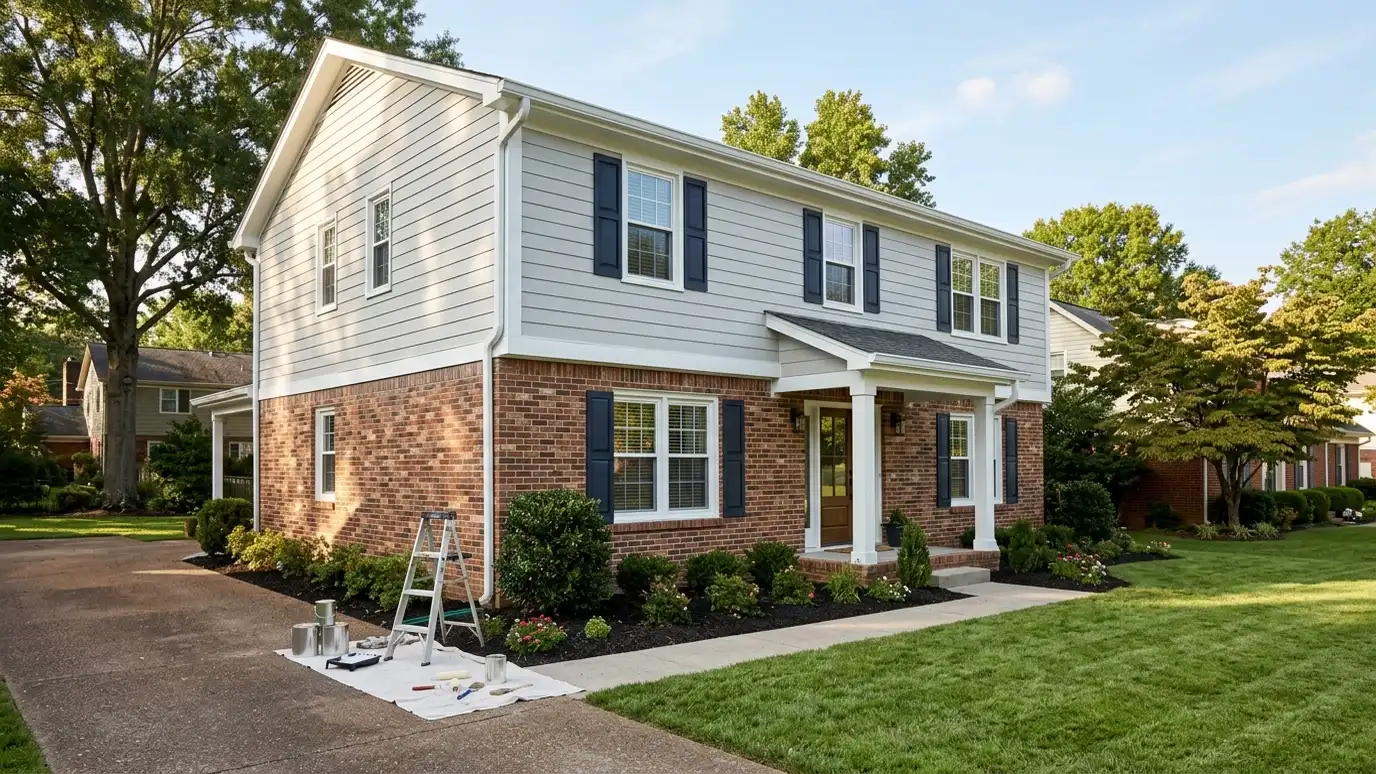
If your house has several different materials, such as brick, trim and siding, ask how each will be prepared and primed. A single approach rarely suits all of them.
Products and finishes
Quality exterior paint has resins and pigments that resist fading and moisture. Satin and semi-gloss are popular for siding and trim, while flat can suit stucco.
Two coats are common for full coverage and durability.
Choose colors with exposure in mind. Very dark colors on sunny walls can fade or heat the surface.
Colors look different outside in sunlight than they do on a chip. Test large samples on several walls and watch them through a day before you commit.
Trim, doors and details
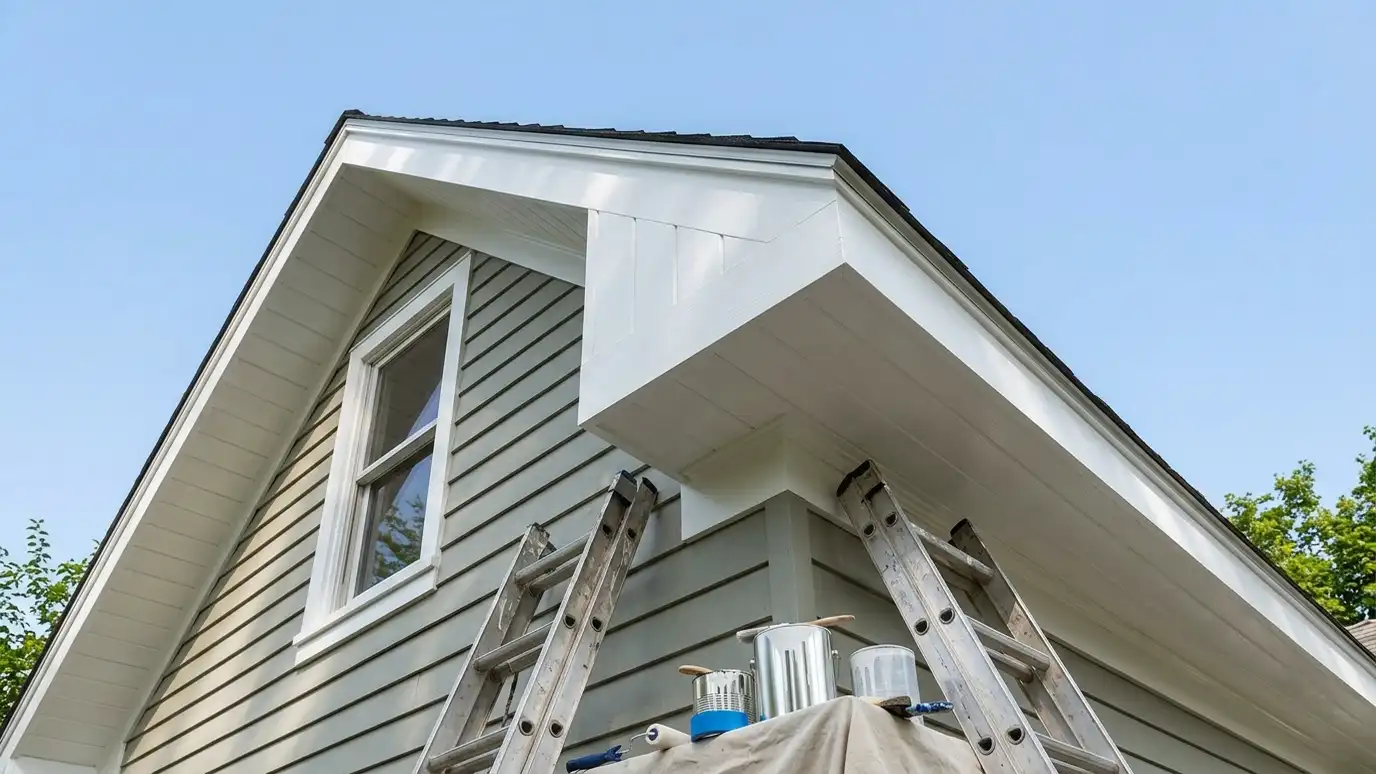
Trim, shutters, soffits, fascia and doors are painted with care and often in a different sheen. Details frame the house.
Front doors take the harshest sun and the most touch, so they use hard enamels.
Crisp caulk lines and clean edges make the whole house look finished.
Look closely at windowsills, door bottoms and horizontal surfaces. Water collects on these areas, so they need careful caulking and sound paint to stay protected.
Maintenance
Wash the house regularly to remove dirt and mildew. Check caulk and touch up chipped spots before moisture gets in.
Trim shrubs back from walls so surfaces can dry.
Small repairs each year stretch the life of the paint and reduce the cost of the next full repaint.
Make a note of the date and products used on your exterior. When it is time to touch up, you will know exactly what to match.
Exterior paint lasts when the prep is thorough, the weather cooperates and small repairs are made early.