Know the damage
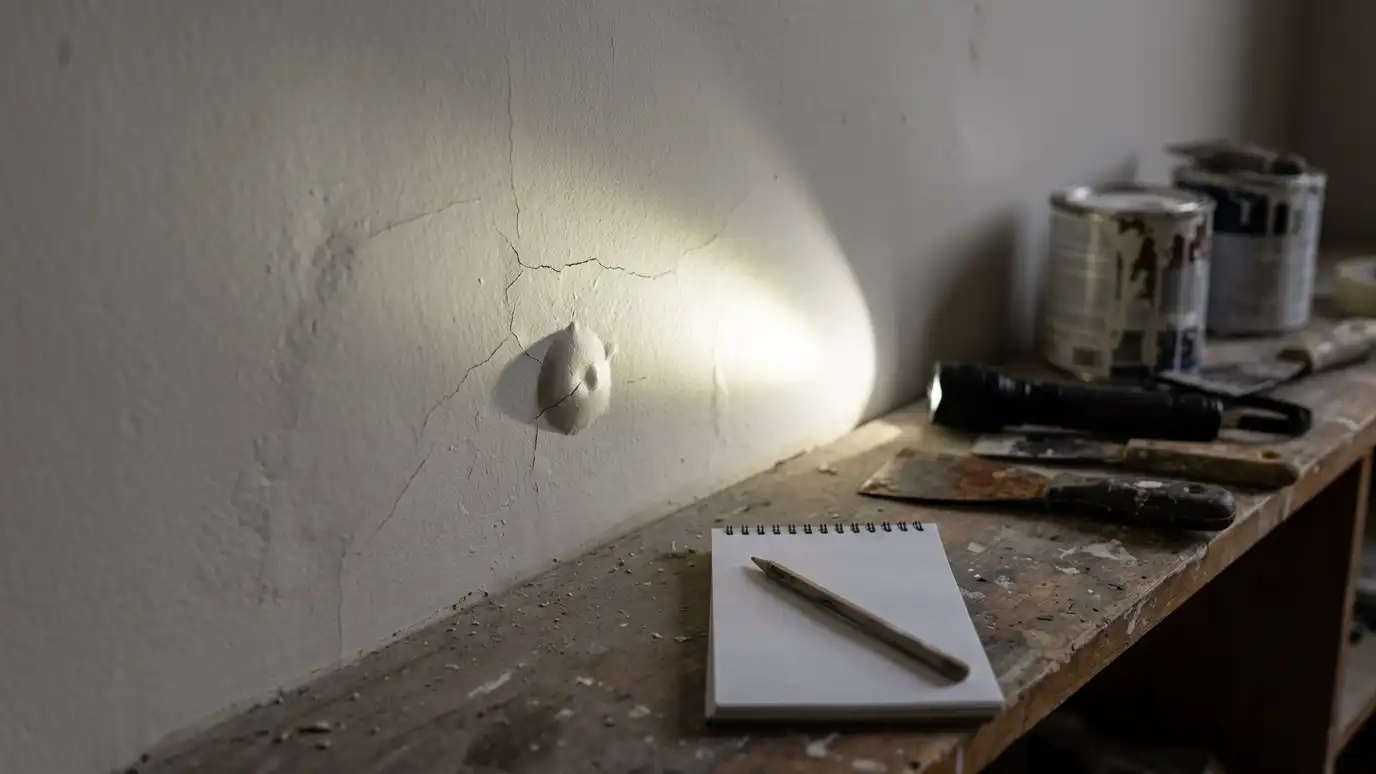
Not all drywall damage is alike. Nail pops, dents and small holes are cosmetic. Cracks along joints or above doors point to movement. Soft, stained or bubbled drywall points to moisture.
Before repairing, look for the cause. A crack from settling needs a flexible repair, and a stain from a leak needs the leak fixed first.
Take photos and note when the damage appeared.
Take a photo of damage before you start, and take another when you finish. Seeing progress helps you judge whether repairs blend or need another coat.
Small holes and dents
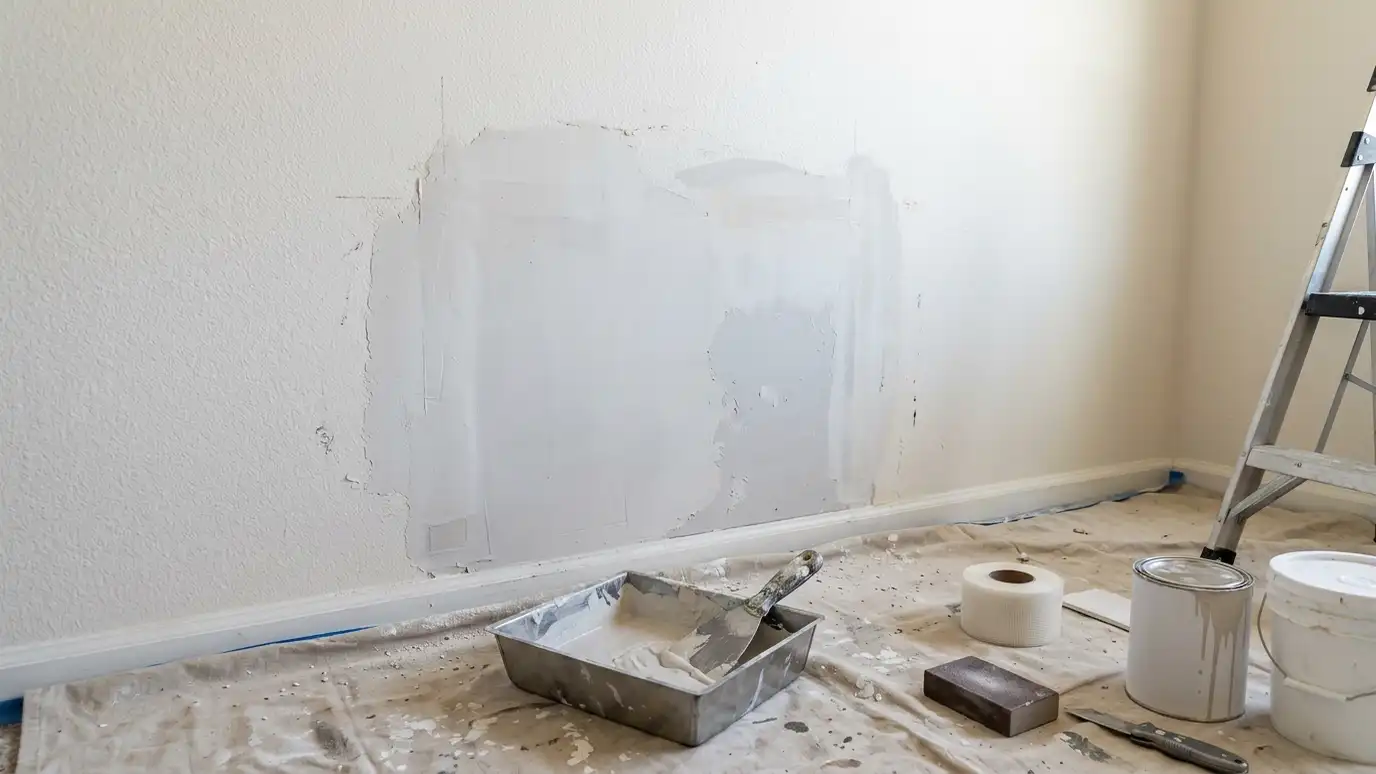
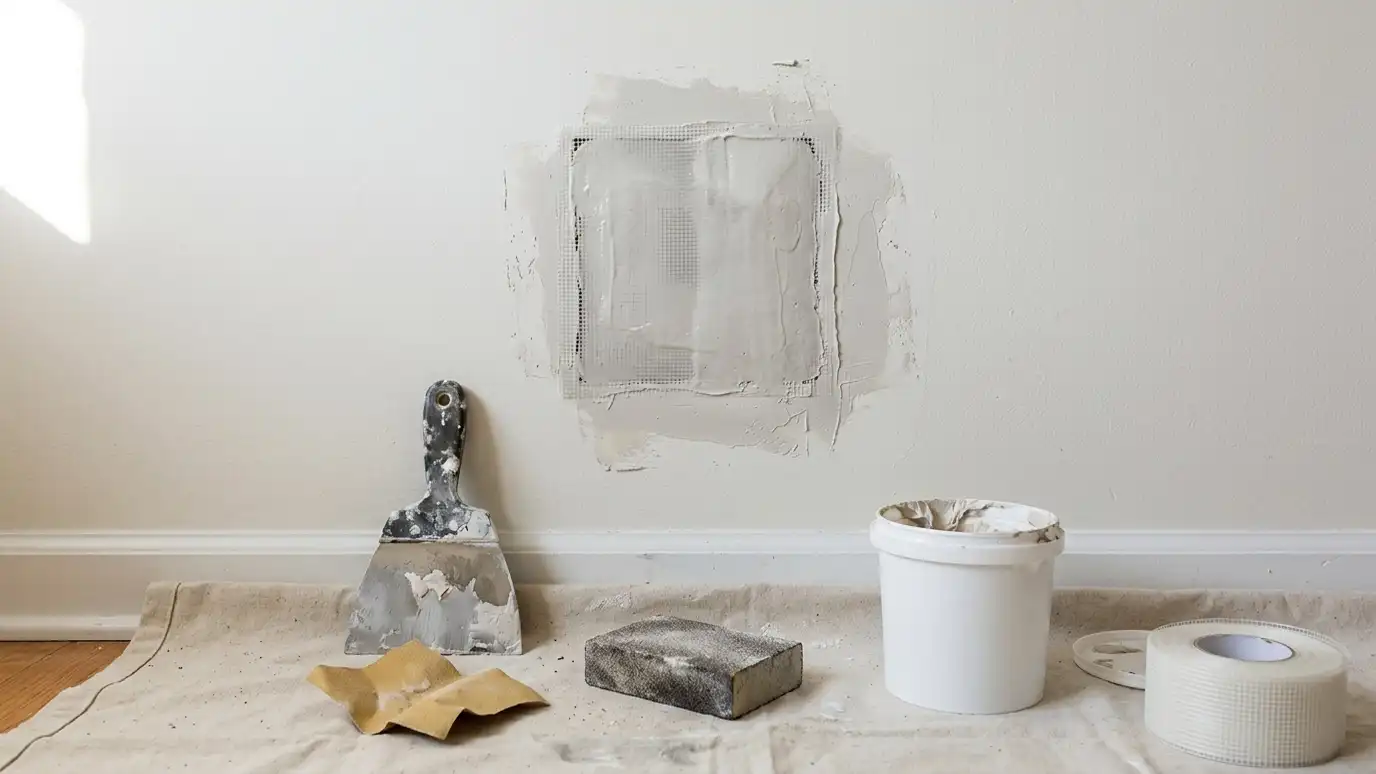
Nail holes, dents and small anchor holes are filled with lightweight spackle or compound, sanded smooth and primed. Larger holes up to a few inches can be patched with a mesh or adhesive patch and compound.
The key is thin layers and feathering wide so the repair blends.
Prime before painting, since bare compound absorbs paint differently than the wall.
For small holes, bigger is not always better. A thin, wide layer of compound hides better than a thick bump that needs sanding down.
Large holes
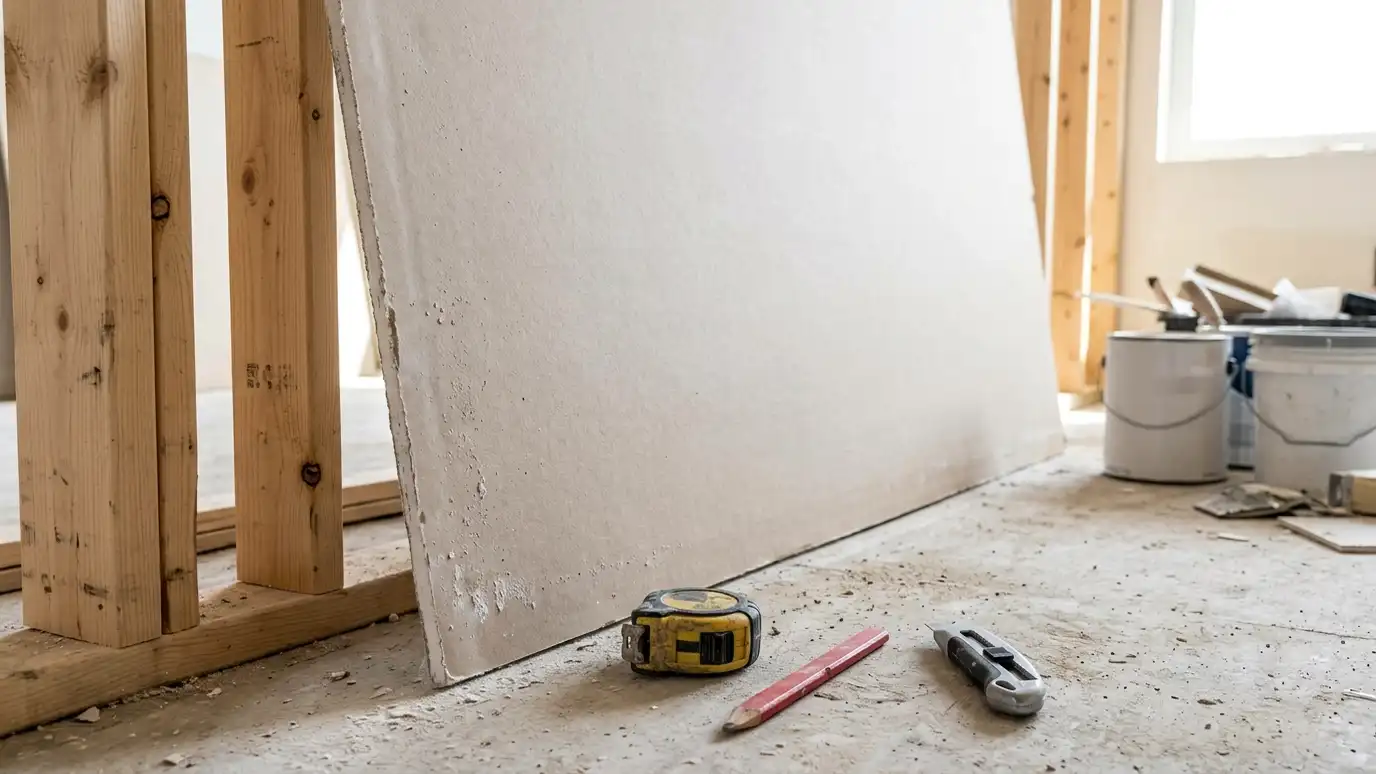
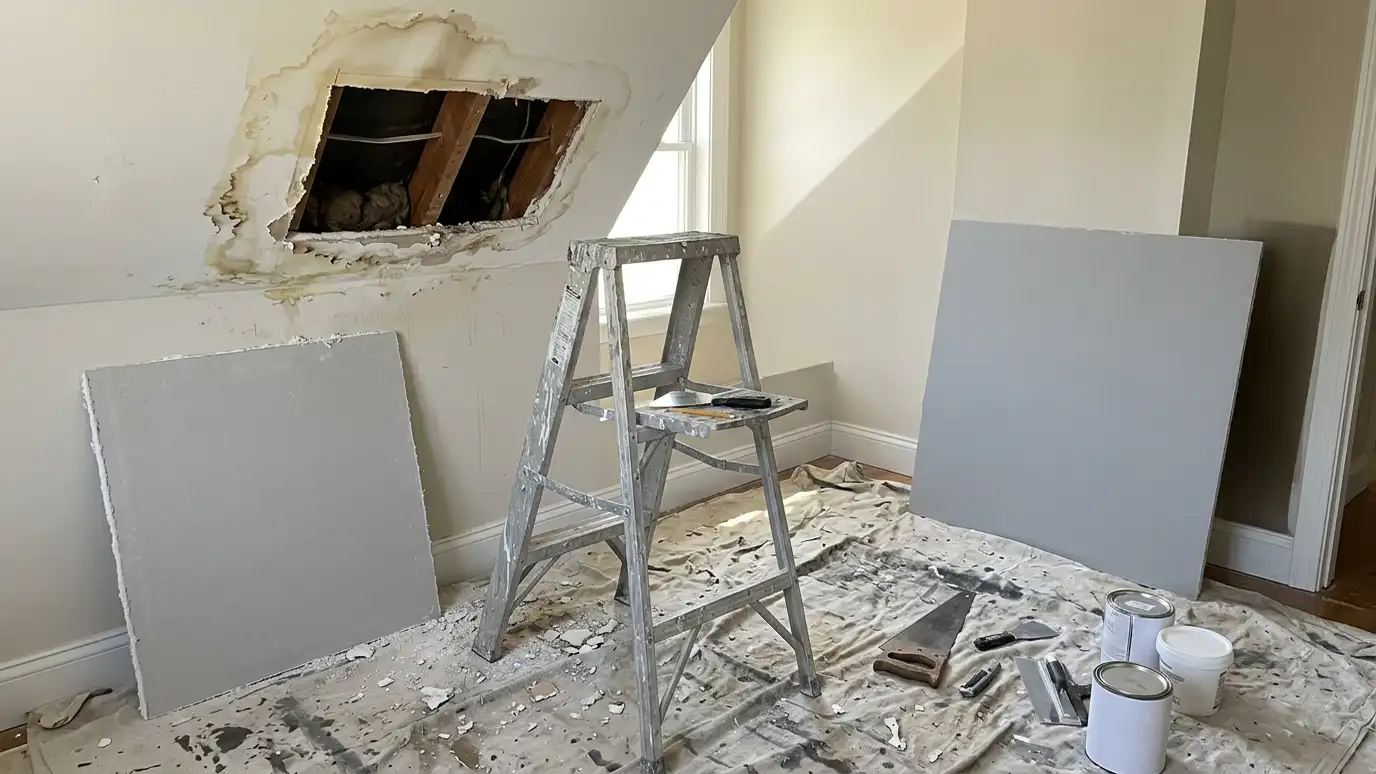
A large hole needs a clean opening, backing and a new piece of drywall. Edges are taped and coated with compound in thin layers, sanded and primed.
Strong backing keeps the patch from cracking later.
Texture and paint matching complete the repair.
Always back large patches. A patch without backing can flex and crack, even if it looks perfect at first.
Cracks
Cracks at corners and above doors and windows usually come from seasonal movement. They are opened slightly, taped and filled so they are less likely to reopen right away.
Wide cracks or repeating cracks may point to structural movement. We tell you when to consult a specialist.
A flexible compound and tape make a longer-lasting repair.
If a crack returns in the same spot after a repair, take that as a clue. Persistent cracks may point to movement or humidity that deserves attention.
Water damage
Water-damaged drywall must be dried and the leak fixed. Soft or stained board is cut out to dry framing and replaced. Stains are sealed with a stain-blocking primer.
If mold is suspected, a mold specialist should look before the wall is closed.
Painting over wet drywall is a common reason stains return.
Check the area above a stained ceiling for plumbing, roof or HVAC issues. Fixing the source saves repeated repairs and protects your home.
Texture and paint matching
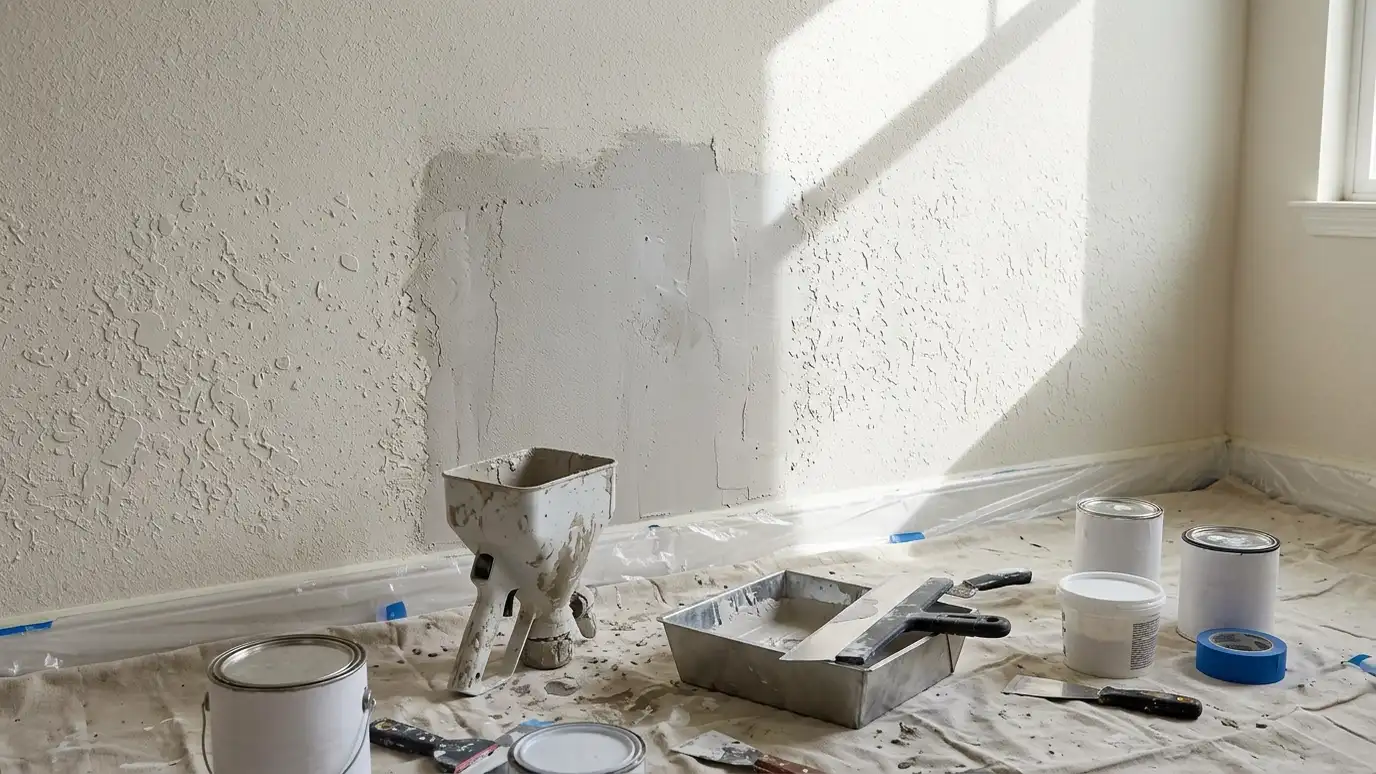
A smooth patch on a textured wall shows. Texture is matched with sprays or tools, tested on a sample and blended outward.
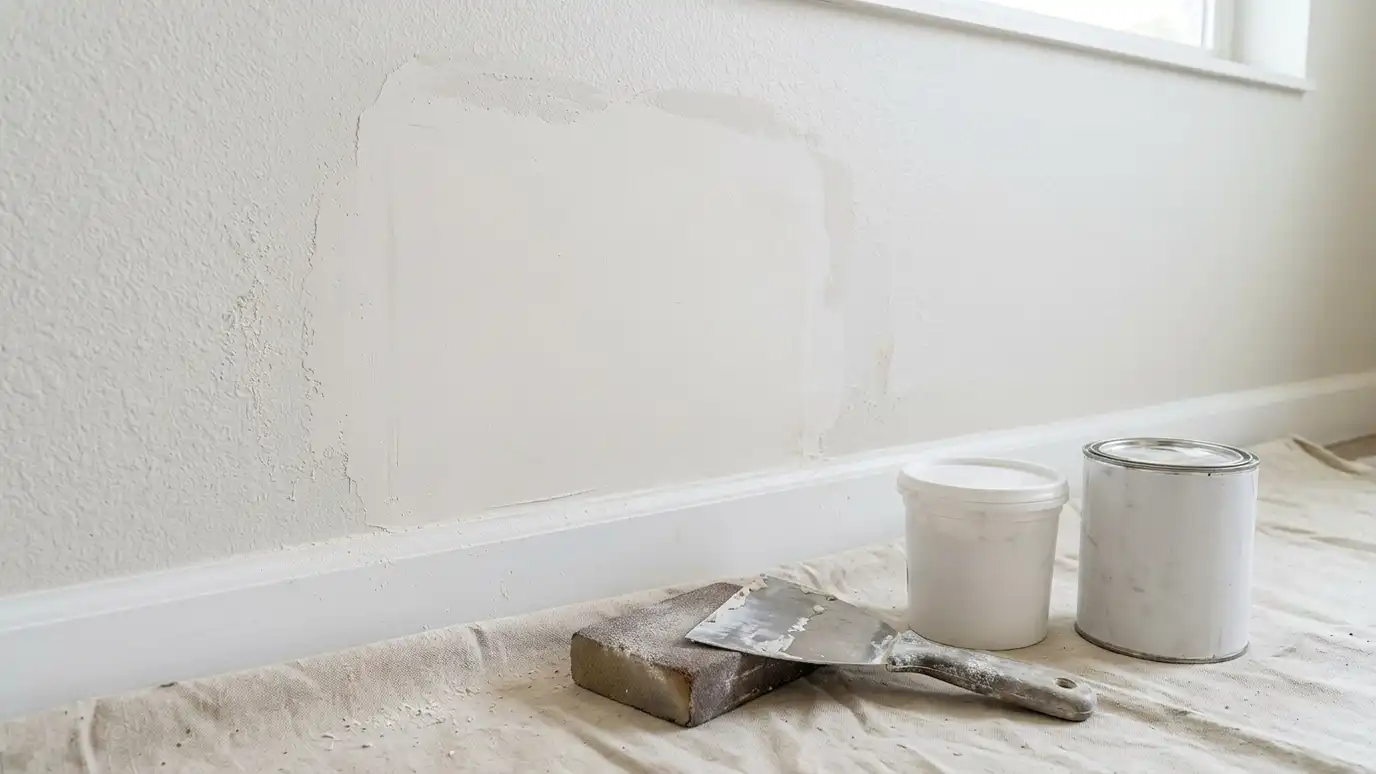
The repaired area is primed and painted, often the whole wall, so color and sheen match.
A repair that cannot be found is the goal.
Even a perfect patch looks wrong under a different texture or sheen. Matching both is the finishing touch that makes a repair disappear.
Find the cause, repair with thin layers, prime and match texture and paint.